Key Points in Tea Brewing | How To Brew a Good Cup of Tea
Brewing tea should not be a burdensome and fussy activity if you know the basic and general rules.
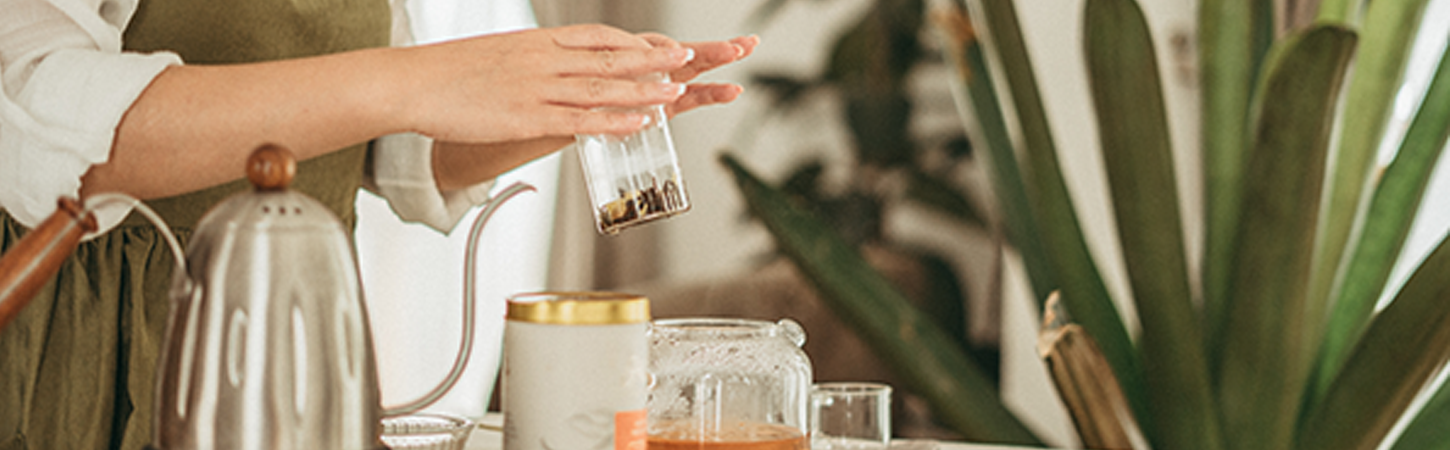
Brewing tea should not be a burdensome and fussy activity if you know the basic and general rules. Instead, brewing tea should be a fun and meditative activity, a moment for you to slow down and enjoy every step of the tea brewing. We understand that tall the rules of tea brewing can be intimidating sometimes and this is the thing that we really do not want to happen!!! We want people to be able to enjoy tea to the fullest by learning and understanding the key points that will enhance your tea brewing to the next level!
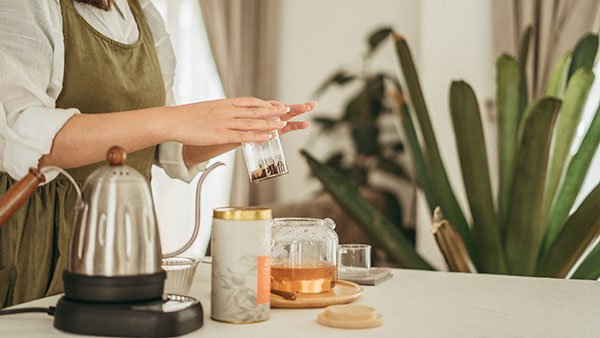
We will talk about the main things that you have to pay attention when brewing tea wherever you are without being hassle. Basically, for teas with lighter color such as white, green and light oolong tea, we use lower water temperature and shorter steeping time. On the other side, for darker tea like black, dark oolong and Pu Erh tea, we use higher temperature water and usually a bit longer steeping time as well.
Five Keys of Tea Brewing
- tea to water ratio
- water temperature
- steeping time
- water quality
- teawares
Tea to Water Ratio
Whether you use a digital scale or tea spoon (tsp), you can always make a decent cup of tea. Our general recommendation is to use 1 : 100 ratio which means 1 gram tea per 100 ml water (this ratio can be adjusted to your preference if you liked a stronger or lighter brew). Enjoy the versatility of tea leaves! We recommend you to buy a digital scale that can be found widely in the marketplace. But if you use teaspoon as measurement, remember this simple guide : use 1 tsp per 250 ml water for small sized tea leaves, and add more tsp for big sized tea leaves (usually 2 or 3 tsp for even bigger leaves).
Water Temperature & Steeping Time
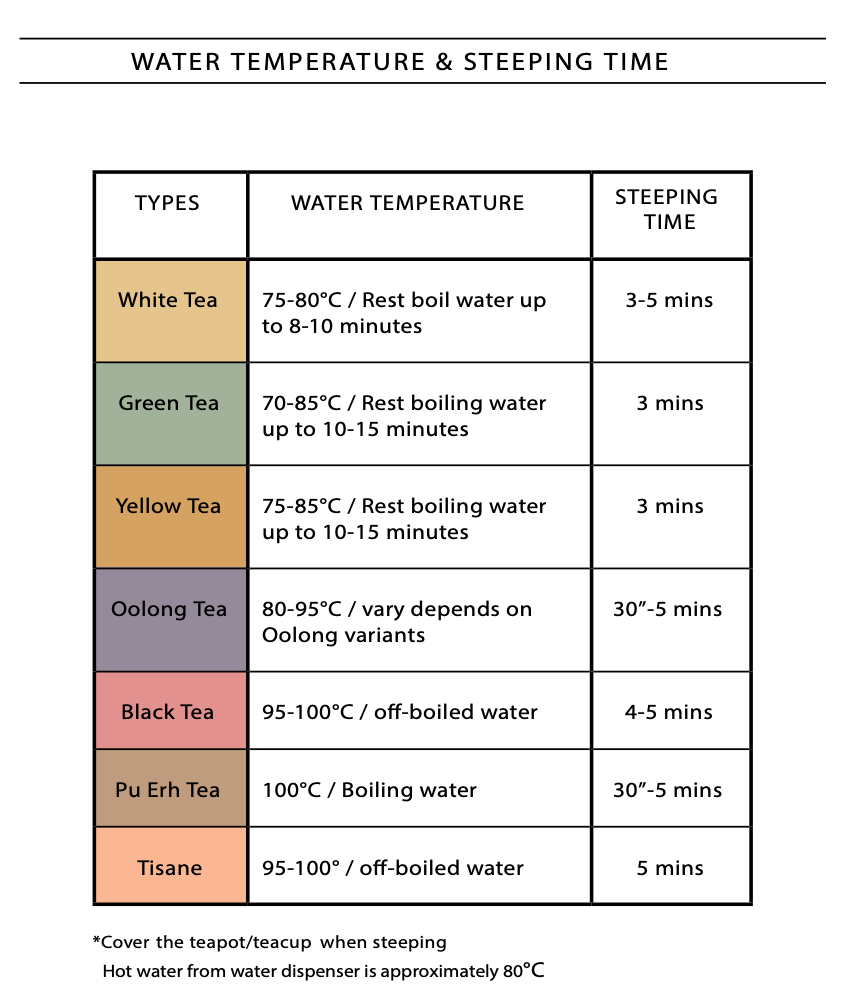
You can use this table below as a guideline for water temperature and steeping time. This table including the ninja way if you don’t have electric kettle with temperature set up with you. But pretty sure we all have a timer on our mobile phone, so actually there is no excuse to have a great cup of tea.
| Type | Water temperature | Steeping time |
|---|---|---|
| White Tea | 75–80°C / rest boiled water up to 8–10 minutes | 3–5 mins |
| Green Tea | 70–85°C / rest boiling water up to 10–15 minutes | 3 mins |
| Yellow Tea | 75–85°C / rest boiling water up to 10–15 minutes | 3 mins |
| Oolong Tea | 80–95°C / varies depending on the oolong | 30 sec–5 mins |
| Black Tea | 95–100°C / off-boiled water | 4–5 mins |
| Pu Erh Tea | 100°C / boiling water | 30 sec–5 mins |
| Tisane | 95–100°C / off-boiled water | 5 mins |
*Cover the teapot/teacup when steeping. Hot water from a water dispenser is approximately 80°C.
Water Quality
Fresh and clean (no smell, color and flavor) spring water is the best for tea brewing! We recommend you to avoid using demineral or distilled water, not that it’d cause you any damage but you will get a more flavorful cup of tea using water with minteral content.
Equipment
Do you know that different tea brewing vessel will result in different taste of the brew? This topic is a little bit more complicated. When you have the time and feel like to have a mini experience, you can try brewing the same tea in 2 different equipment materials, for example in glass tea pot and clay teapot. For certain teas, besides the flavor difference, the color and aroma of the tea also distinct.
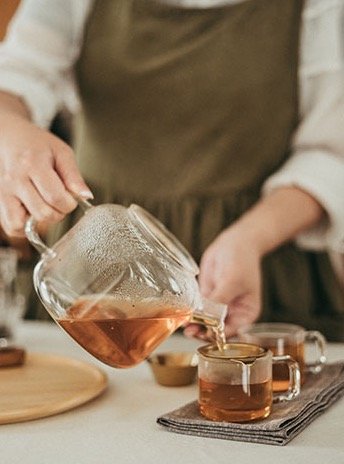
Brewing tea properly will enhance the whole drinking tea experience and also make you appreciate tea more. Because a great cup of tea involved many people who have worked hard like the tea pickers, tea farmers, logistic drivers, tea blender and etc that allow you to enjoy it conveniently. Happy tea brewing and enjoy!